
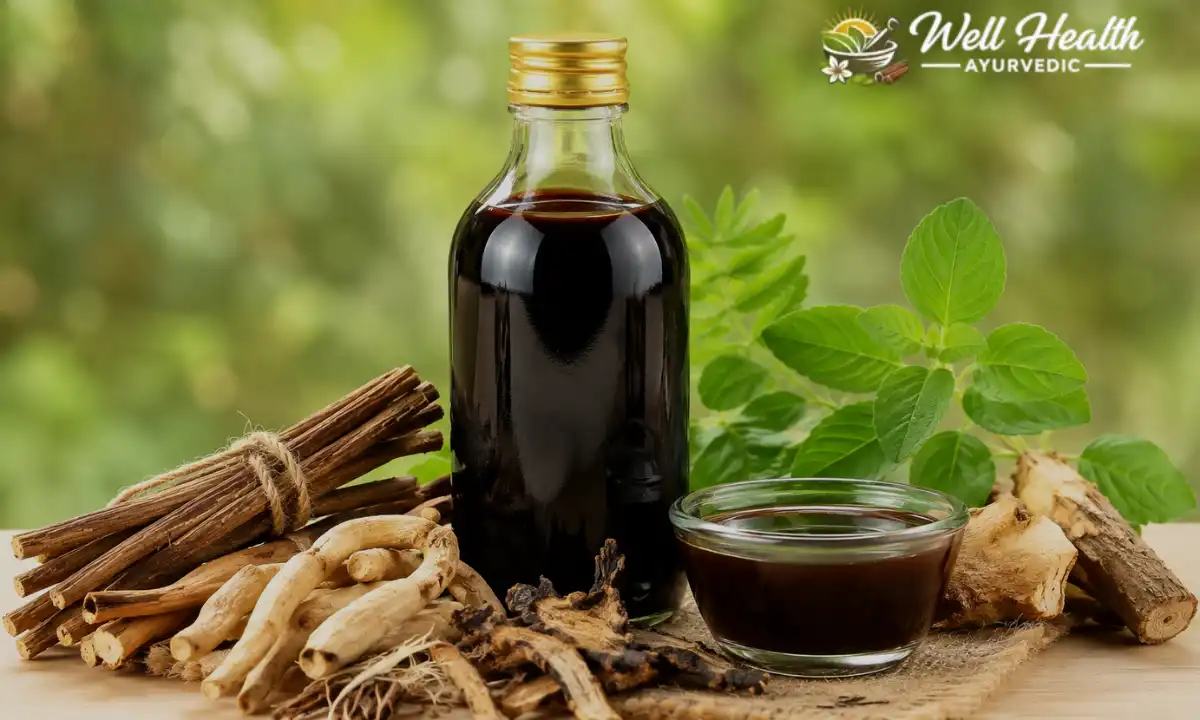
Dashmularishta is an Ayurvedic fermented herbal tonic which has been in use for centuries as a health tonic and has been widely used by people all over the world. Its main uses are related to women’s reproductive system, building up strength after delivery, joint and muscle problems and digestive issues. This unique tonic is prepared using famous Dashamoola (consisting of ten medicinal roots) along with many other herbs.
The following guide will discuss various aspects such as use, health benefits, ingredients, dosage, precautions and side effects of Dashmularishta.
What is Dashmularishta?
Dashmularishta is an Arishta that is prepared using the natural fermentation method in accordance with the principles of Ayurveda.
Ayurveda believes that Dashmularishta is one of the best medicines to balance Vata Dosha, postpartum healing, muscle building, and maintaining overall vitality.
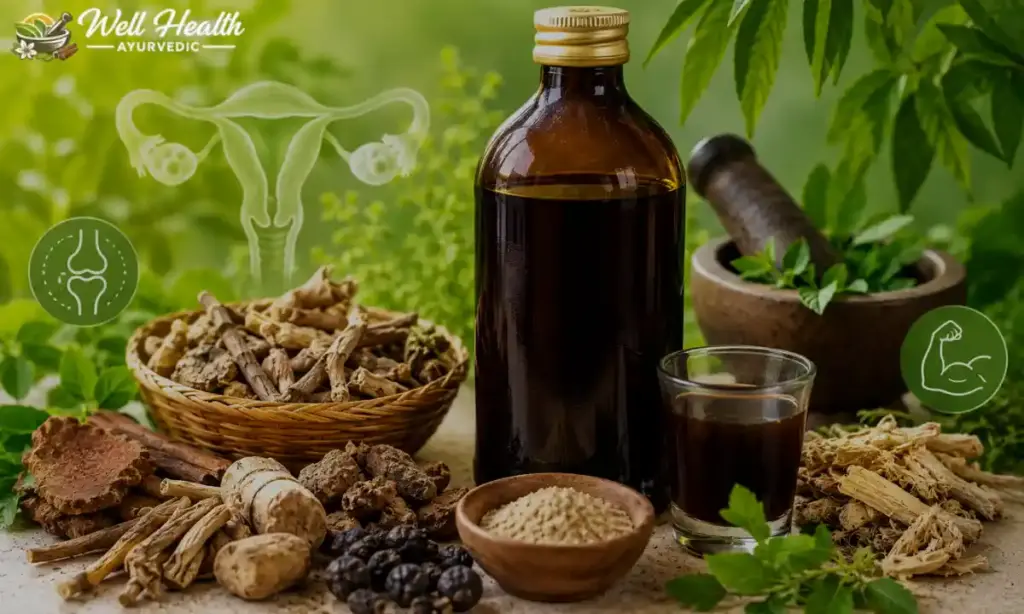
Main Ingredients of Dashmularishta
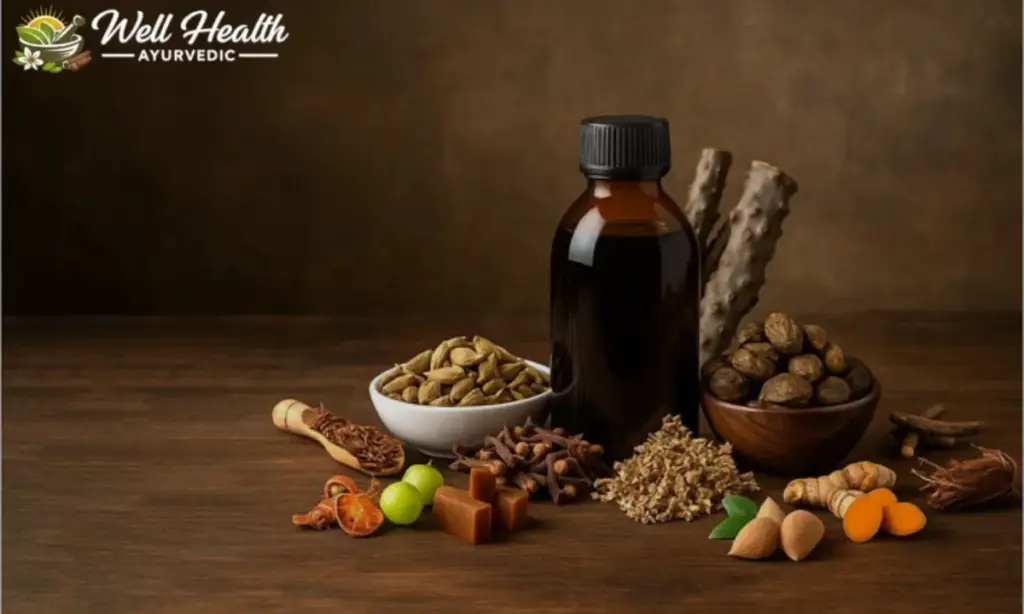
Dashmularishta contains Dashamoola along with many traditional Ayurvedic herbs. Some important ingredients include:
- Dashamoola (Ten medicinal roots)
- Guduchi (Giloy)
- Haritaki
- Amalaki
- Bibhitaki
- Manjistha
- Rasna
- Chitrak
- Pippali
- Dhataki Flowers
- Jaggery (used during fermentation)
The exact ingredients may vary slightly depending on the manufacturer.
Dashmularishta Uses
- Supports Recovery After Childbirth
Dashmularishta is traditionally given after delivery to help improve strength, support uterine recovery, and promote overall wellness under medical supervision.
- Helps Improve Women’s Reproductive Health
Ayurvedic practitioners often recommend Dashmularishta to support menstrual health and maintain reproductive wellness.
- Supports Joint Health
The herbal ingredients help maintain healthy joints and may reduce stiffness associated with Vata imbalance.
- Helps Relieve Muscle Weakness
It is commonly used to improve muscle strength and reduce physical fatigue after illness or weakness.
- Supports Healthy Digestion
Dashmularishta stimulates digestive fire (Agni), helping improve appetite and digestion while reducing bloating.
- Promotes Energy and Vitality
Its rejuvenating herbs help improve overall stamina and reduce feelings of tiredness.
- Supports Nervous System Health
Ayurveda considers Dashmularishta useful for calming Vata Dosha, which supports healthy nerve function.
- Helps During General Weakness
People recovering from illness may use it under the guidance of an Ayurvedic physician to regain physical strength.
- Supports Healthy Inflammation Response
Several herbs in the formulation are traditionally used to support the body’s natural response to inflammation.
- Promotes Overall Wellness
Regular use as advised by an Ayurvedic expert may help maintain overall health and balance.
Health Benefits of Dashmularishta
- Supports postpartum recovery
- Helps maintain menstrual health
- Promotes healthy digestion
- Improves appetite
- Supports joint and muscle wellness
- Helps reduce physical weakness
- Balances Vata Dosha
- Supports natural energy levels
- Helps maintain overall vitality
- Traditional Ayurvedic rejuvenating tonic
How to Take Dashmularishta
The dosage depends on age, body condition, and medical advice.
Adults
- Commonly 15–30 ml after meals.
- Usually mixed with an equal quantity of water.
Children
- Only under the supervision of a qualified healthcare professional.
Always follow the dosage recommended by your Ayurvedic doctor.
Best Time to Take Dashmularishta
Dashmularishta is generally taken:
- After meals
- Twice daily if recommended
- With an equal amount of lukewarm water
Do not exceed the recommended dosage.
Possible Side Effects
Dashmularishta is generally considered safe when taken in the prescribed quantity. However, excessive use may cause:
- Mild stomach discomfort
- Acidity in sensitive individuals
- Loose stools
- Allergic reactions to herbal ingredients (rare)
If any unusual symptoms occur, discontinue use and consult a healthcare professional.
Who Should Avoid Dashmularishta?
Consult a qualified healthcare provider before using Dashmularishta if you:
- Are pregnant
- Have diabetes (some formulations contain jaggery)
- Have chronic liver or kidney disease
- Are taking prescription medicines
- Have known allergies to herbal products
Breastfeeding women and individuals with existing medical conditions should use it only under professional guidance.
Storage Tips
- Keep the bottle tightly closed.
- Store in a cool and dry place.
- Protect from direct sunlight.
- Keep away from children.
Conclusion
Dashmularishta is an ancient Ayurvedic medicine which has traditionally been used for improving overall health condition, digestion, body strength, and recovery after physical weakness. It is particularly popular in Ayurveda due to its positive influence on women’s health, postpartum period, joint health, and balance of the Vata dosha. Taking Dashmularishta in the prescribed dosage under the guidance of a qualified Ayurvedic physician, Dashmularishta may become a part of your healthy routine. Nevertheless, Dashmularishta is not a replacement for medical therapy. Pregnant women, nursing mothers, people with diabetes or chronic diseases should visit their doctor before consuming the Ayurvedic tonic. Using Dashmularishta together with a healthy diet, physical activity, adequate sleep, and good habits is a key to good health.
Frequently Asked Questions (FAQs)
Can Dashmularishta be taken daily?
Yes, it may be taken daily for a prescribed period if advised by an Ayurvedic practitioner.
Is Dashmularishta good after delivery?
Traditionally, it is widely used in Ayurveda to support postpartum recovery. It should be taken only under professional guidance.
Does Dashmularishta improve digestion?
Yes, it is traditionally believed to support digestion and improve appetite.
Can men take Dashmularishta?
Yes, it is traditionally believed to support digestion and improve appetite.
Can men take Dashmularishta?
Yes. Although it is commonly associated with women’s health, Ayurvedic practitioners may also recommend it for men experiencing weakness, poor digestion, or Vata-related conditions.
Does Dashmularishta have alcohol?
It contains a very small amount of naturally formed self-generated alcohol due to the traditional fermentation process. This is different from added alcohol and helps preserve the formulation.
Also Read About: Sitopaladi Churna Uses: Benefits, Ingredients, Dosage, and Side Effects