
Knee pain is a very common issue and can interfere with walking, climbing stairs, exercises, and other activities. Age-associated changes in joints, osteoarthritis, injuries in the past, overload and inflammation are a few causes of knee pain. People who seek a natural solution often seek out Kerala Ayurvedic treatment for knee pain since Kerala has a well-known tradition of Ayurveda and Panchakarma therapy.
The Ayurvedic treatment of knees includes the use of herbs, oil massage, different techniques, special diets and physical activity. However, the exact type of therapy should be selected based on the specific cause of knee pain. Evidence regarding the efficacy of Ayurvedic treatment is limited, although some scientific studies report positive effects.
What Is Kerala Ayurveda for Knee Pain?
Kerala Ayurveda is an alternative method of health care which often employs herbal oils, medicines, massage therapy and specific treatment techniques. In the case of knee pain, Ayurvedic healers can choose remedies based on symptoms, age, physical state and problem of the patient.
Janu Sandhigata Vata is one of the common concepts of Ayurveda for knee osteoarthritis; however, an Ayurvedic diagnosis cannot be taken as an equivalent of a medical one. Knee osteoarthritis includes breakdown of cartilage tissues and causes pain, stiffness, swelling and loss of mobility.
Why Choose Kerala Ayurvedic Treatment for Knee Pain?
Kerala is especially known for traditional Ayurvedic treatments, which include oil therapies and Panchakarma treatments. Treatment with Ayurveda becomes popular because it gives an opportunity to get a personalized treatment regimen combining external treatment with advice on the diet and activities.
What makes it special is the fact that treatment becomes individual rather than applying one drug to all cases of knee problems. But the “natural” factor does not guarantee safety, so Ayurvedic drugs need to be chosen properly.
Common Kerala Ayurvedic Treatments for Knee Pain
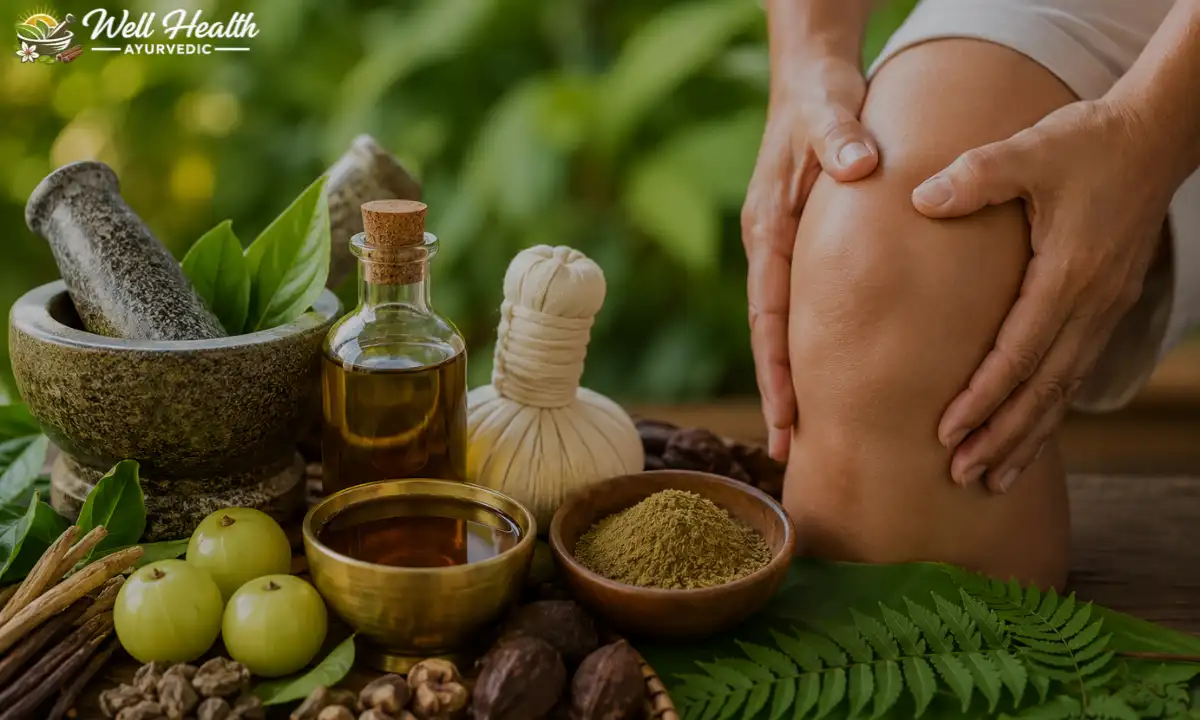
Abhyanga
Abhyanga is a massage therapy technique using oil which is derived from herbs. It is meant to be used as a way to relax and can assist with stiffness.
Massage may help some individuals but it lacks concrete evidence when used in knee osteoarthritis.
Janu Basti
Janu Basti is an Ayurvedic treatment technique that involves retention of warm oil at the knee joint level for some time. This treatment is often provided in the Kerala Ayurvedic centers for pain and rigidity in the knee joint region.
This treatment needs to be conducted by a professional since the correct temperature, time, and oil have to be used based on the person’s requirement.
Pizhichil
In Pizhichil, there is a regulated pouring of warm oil on the body, which may include massage. This treatment procedure is one of those that is related to Kerala Ayurveda.
This procedure can be included in an Ayurvedic treatment process, although it does not act as a cure for knee problems.
Kizhi Therapy
Kizhi is a traditional Ayurvedic therapy involving herbal preparations contained in cloth bundles that are applied to the body. Different types of kizhi may be selected depending on the practitioner’s assessment.
It is often used with the goal of reducing stiffness and improving comfort and mobility.
Herbal Oils
An individual undergoing Ayurvedic treatment may be advised to apply various herbal oils depending on his health state. Since there may be many herbs in one herbal oil in Ayurvedic practices, the formula may differ from the other.
One should choose the product recommended by an experienced practitioner instead of using the strong herbal oil only because of its advertising on the Internet.
Ayurvedic Herbs Commonly Associated With Joint Health
There are several herbs that have been traditionally used in Ayurveda in the case of musculoskeletal complaints. One such herb that has received considerable research attention is Boswellia serrata.
Evidence indicates that oral administration of Boswellia preparations can give a reduction in the pain associated with osteoarthritis. However, there is not enough scientific evidence that it is a definite cure.
Other herbs may be included in the Ayurvedic formulations too, but scientific evidence varies greatly from one preparation to another. Hence, a traditional reputation does not necessarily mean effectiveness in all cases.
Kerala Ayurvedic Medicine for Knee Pain: What May Be Included?
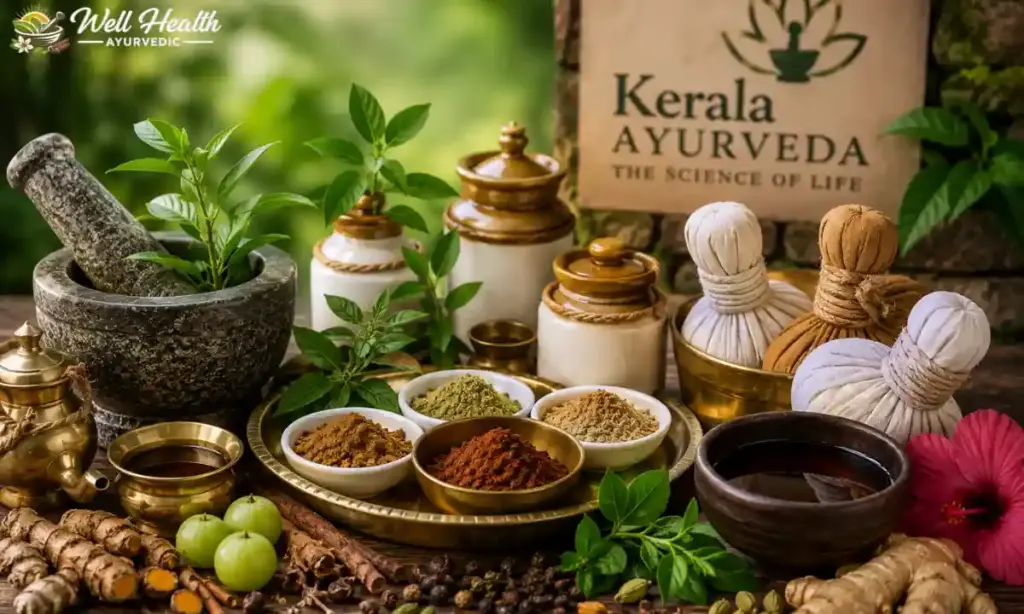
There is no single Ayurvedic medicine that is suitable for everyone with knee pain. Depending on the diagnosis, an Ayurvedic practitioner may consider:
- Herbal oils for external application
- Herbal tablets or powders
- Decoctions or Kashayam
- Medicated ghee preparations
- Janu Basti
- Abhyanga
- Kizhi therapies
- Panchakarma-based treatment plans
- Diet and lifestyle modifications
- Gentle stretching and physical activity
The exact medicine, dose and duration should be individualized rather than self-prescribed.
Can Ayurveda Cure Knee Osteoarthritis Permanently?
There are currently no scientific data to suggest that Ayurvedic medicine is capable of reversing cartilage damage associated with knee osteoarthritis on a permanent basis.
While some studies have shown that there are certain Ayurvedic formulations that may assist in alleviating pain and improving functionality, most of these studies have had serious flaws. Consequently, Ayurvedic medicine should be considered as a complementary treatment modality only.
Benefits of Kerala Ayurvedic Treatment for Knee Pain
Potential benefits may include:
- Support for managing mild knee discomfort
- Reduction in feelings of stiffness
- Improved comfort during movement
- Relaxation through massage-based therapies
- Support for mobility when combined with appropriate exercise
- Individualized diet and lifestyle guidance
- A holistic approach to musculoskeletal health
The response varies from person to person, and treatment should be selected according to the underlying cause of knee pain.
Ayurveda and Exercise for Knee Pain
Ayurvedic treatment does not always have to exclude physical exercise. It is necessary for a great number of people suffering from knee osteoarthritis.
There is scientific evidence that supports the use of exercise therapy for knee osteoarthritis, including aerobic exercise and strengthening exercises. The exercise must be tailored to one’s pain level, movement capabilities, and physical condition.
In that case, mild walking and strengthening can be included in an Ayurvedic treatment regime.
Kerala Ayurvedic Treatment vs Home Remedies
Home treatments like hot packs or movement can give temporary relief to some individuals; however, persistent knee pain should not be managed in the privacy of your home.
Pain that persists, is severe, or even affects regular walking needs to be identified for its cause. There are many causes of knee pain including arthritis, trauma, infections and others.
How Long Does Ayurvedic Treatment Take for Knee Pain?
Not all therapy will be equally long for everyone. Some people might experience improvements relatively quickly, while other patients suffering from chronic joint pain may require more time.
It will depend on various factors including age, symptoms, causes of pain, level of physical activity, previous injuries, and individual reaction to therapy. The practitioner must not insist on therapy that is too prolonged.
Is Kerala Ayurvedic Medicine Safe?
There are some dangers that come with Ayurvedic treatment, especially in situations where the medicines are sourced from unknown places or poorly manufactured.
In some cases, it has been noted that there is the presence of toxic levels of heavy metals like lead, mercury, or arsenic in some of the Ayurvedic medicines. In addition, herbal medicines may react with the usual medicines.
Because of this, one should always get medicines from good brands and consult an Ayurvedic physician. Also, in case one is on prescription medicines, this needs to be known to the Ayurvedic physician and regular doctor.
Who Should Consult a Doctor Before Ayurvedic Treatment?
Medical evaluation is especially important when knee pain is:
- Sudden or severe
- Associated with a major injury
- Accompanied by significant swelling
- Associated with redness or warmth
- Accompanied by fever
- Causing difficulty bearing weight
- Progressively getting worse
- Associated with locking or significant instability
A hot or red joint accompanied by fever can indicate a condition other than ordinary osteoarthritis and should receive prompt medical attention.
How to Choose a Kerala Ayurvedic Centre for Knee Pain
Before beginning treatment, consider the following:
- Choose a centre with qualified Ayurvedic practitioners.
- Ask for an assessment of the cause of knee pain.
- Inform the practitioner about all medicines and supplements you take.
- Ask what ingredients are present in any oral medicine.
- Avoid products promising a guaranteed cure.
- Ask about expected treatment duration and follow-up.
- Seek conventional medical evaluation when symptoms require it.
Kerala Ayurvedic Medicine for Knee Pain: Important Tips
Ayurvedic healing is most effective when it is perceived as a component of one’s health care regimen and not as one single remedy that cures everything. Weight management and engaging oneself in physical activity and exercises can be beneficial for individuals with knee arthritis.
Avoid stopping any medication or delaying medical treatment because of your Ayurvedic therapy.
Conclusion
Kerala Ayurveda therapy for knee pain is a common search query for those who are interested in natural methods to manage joint pain. There are different treatments in Kerala Ayurveda including Abhyanga, Janu Basti, Kizhi, and others as well as dietary and lifestyle tips.
There is some information on effectiveness of certain Ayurvedic medicines for the treatment of osteoarthritis; however, the scientific research on their effects is insufficient. Hence, it should be regarded as a supplementary treatment method instead of guaranteed healing tool. It is important to select a competent therapist, good quality remedies and consult a doctor.
Frequently Asked Questions
Which Ayurvedic medicine is best for knee pain?
There is no single best Ayurvedic medicine for every type of knee pain. The appropriate formulation depends on the cause of pain, symptoms and individual health condition.
Is Janu Basti good for knee pain?
Janu Basti is a traditional Ayurvedic therapy used around the knee. It may be included in an Ayurvedic treatment programme, but evidence is not strong enough to describe it as a guaranteed treatment for knee osteoarthritis.
Is Boswellia useful for knee osteoarthritis?
Some studies suggest that oral Boswellia may reduce osteoarthritis-related pain, but the overall evidence remains limited and higher-quality research is needed.
Can Ayurveda repair damaged knee cartilage?
There is not enough high-quality evidence to claim that Ayurvedic medicine can regenerate or permanently repair damaged knee cartilage.
Can I take Ayurvedic medicine with painkillers?
Do not assume that Ayurvedic medicines and conventional painkillers are automatically safe together. Some herbal products can interact with medicines, so discuss all products with a qualified healthcare professional.
Is Ayurvedic oil massage enough for severe knee pain?
For severe or persistent knee pain, massage alone should not replace proper diagnosis and treatment. The underlying cause should first be evaluated.
Also Read About: Ayurvedic Medicine for Period Pain: Natural Relief, Benefits, Safe Remedies & Complete Guide